
Riding the AI Bronc
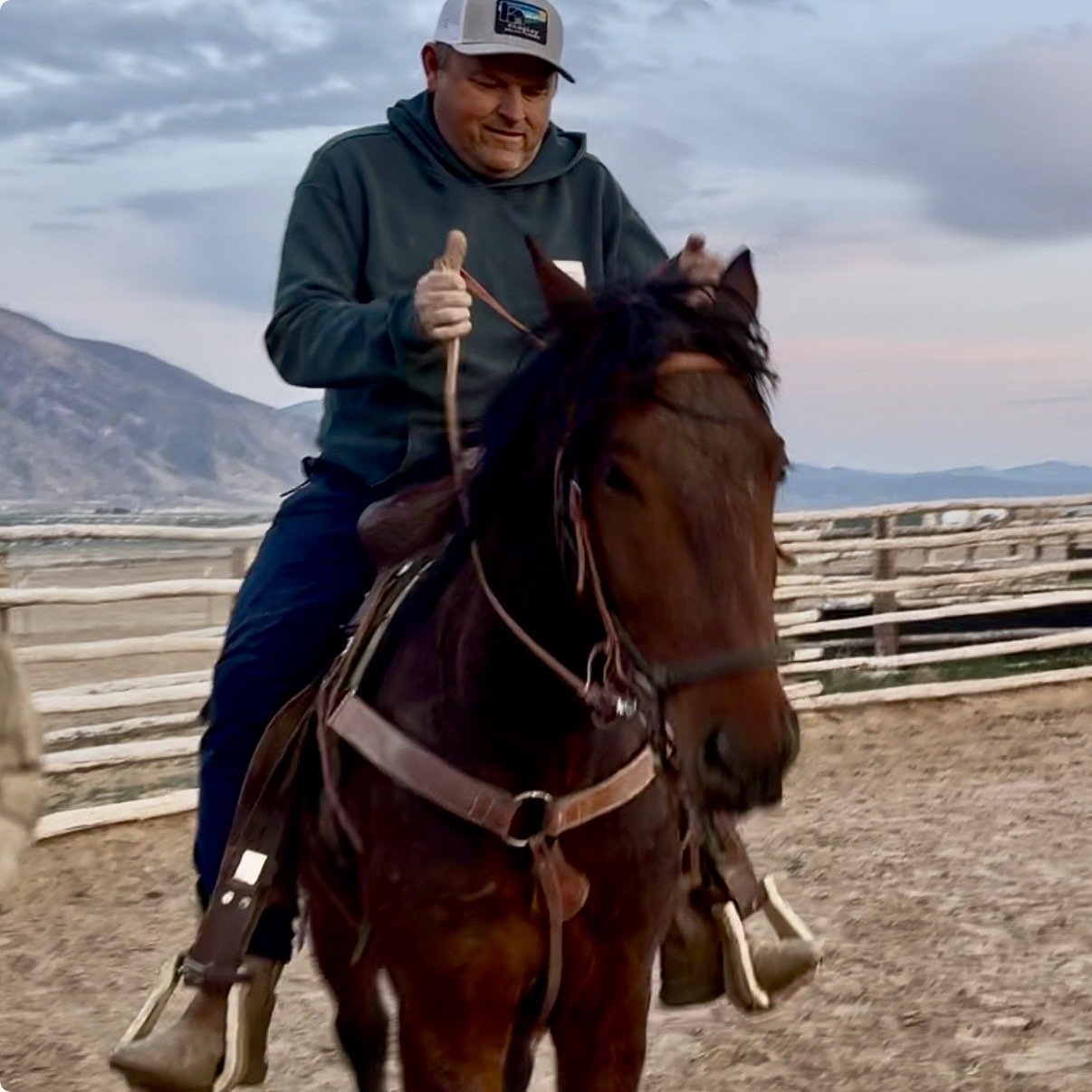
This week, I climbed on the back of a recently trained wild mustang. I was very hesitant. Since I started riding horses seven years ago, I have been thrown off three times and broken my ribs each time. It is a painful experience I didn’t want to repeat.
My son Eli had been riding the horse for several weeks without incident, so I thought it was time for me to get on him, but when the horse felt my weight hit the saddle (Eli is 100 pounds lighter), he started to freak out. I remembered advice from a horse-training video: “You have to get the horse out of the reactive side of its brain and into its thinking side.” You do that by getting it moving in tight circles, first one way and then the other. You can hear Eli in the video below, coaching me to do this while he mocks me for being so scared. I did it—and it worked. I didn’t get bucked off.
We are all metaphorically on the back of a wild horse right now—AI. 71% of Americans are concerned AI will lead to permanent job loss, and 77% think it poses a serious threat to humanity. Fear puts us into the reactive part of our brain, while action moves us back to the thinking part.
I was a research assistant for a wonderful old professor at the start of the PC revolution. He was a wise man, but he looked at the new desktop computer the university had given him with trepidation. He told me countless times, “Taylor, you’ve got to show me how to use that.” But for two years, every time I offered to help him learn, he never took me up on it.
We can’t be frozen in fear; we must start moving, engaging, and learning all we can about this exciting yet intimidating tool if we want to stay on for what looks to be a wild ride.
